
Morning drop-off tears: is your toddler not ready for kindergarten, or is this just natural separation anxiety? Your child clings desperately to your jacket, crying with a trembling voice: “Mommy, don’t leave me here!”
The educator gently tries to guide the child inside, while other parents hurry past. Your heart breaks into pieces. You walk away with unbearable guilt, asking yourself the same painful question: “Is this normal adaptation, or is my toddler not ready for kindergarten yet?”
At DZERCALCE STUDIO, when building Family OS, we based our approach on evidence-based child development science (AAP, Bowlby’s Attachment Theory, and Gottman Emotion Coaching). There is a fundamental difference between natural morning sadness and genuine emotional unreadiness.
Here is a comprehensive 4-perspective breakdown to help you understand your child’s signals and protect their nervous system.
⚡ Quick Guide for Parents (TL;DR)
- Natural Tears: A child cries for 3–5 minutes after drop-off, then calms down and engages in play.
- Red Flag (Unready): Persistent panic, regression, sleep disruption, and somatic stomach aches throughout the entire day.
- Core Rule: Never sneak away while the child isn’t looking. A predictable 1-minute goodbye ritual builds secure attachment.

🚨 7 Real Signs a Toddler Is Not Ready for Kindergarten
- Persistent Distress After 30 Minutes: The child remains inconsolable throughout the day and refuses to engage with toys or other children.
- Somatic Complaints: Regular complaints of stomach ache, nausea, or headache specifically on weekday mornings.
- Developmental Regression: Sudden loss of potty training, thumb sucking, or baby talk at home.
- Sleep Disruption & Night Terrors: Frequent night awakenings, difficulty falling asleep, or panic about tomorrow.
- Loss of Appetite at Daycare: Complete refusal to eat or drink liquids outside the home environment.
- Aggressive Outbursts Post-Pickup: Meltdowns and emotional storms immediately upon returning home (a sign of nervous exhaustion).
- Severe Fear of Separation: Inability to stay in another room even with familiar grandparents or relatives.
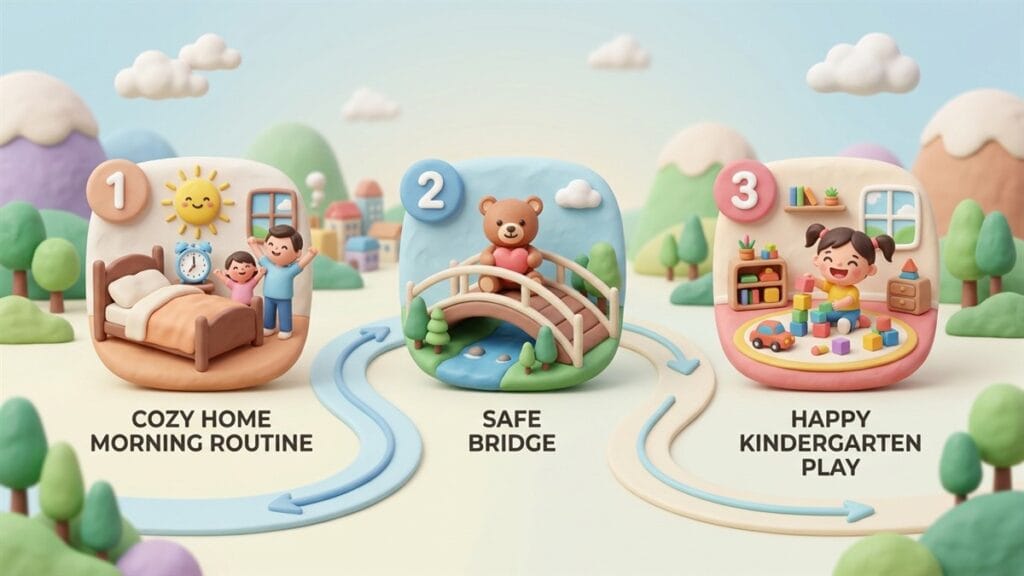
🧠 The 4-Lens Scientific Guidance (Family OS Framework)
1. 🧸 Child Psychologist Lens (Emotional Safety)
- What’s happening: The child’s attachment alarm system treats the kindergarten door as a threat to survival.
- Practical Action: Draw a tiny “connection heart” on your child’s palm and one on yours. Explain: “Whenever you press this heart today, a warm hug travels straight to mommy.”
- What to Say: “I see how hard it is to say goodbye. It’s okay to feel sad. I will always come back after your afternoon snack.”
2. ⚡ Neuropsychologist Lens (Brain & Sensory Load)
- What’s happening: The toddler’s immature prefrontal cortex is overloaded by sensory stimuli (noise, bright lights, group dynamics).
- Practical Action: Transition gradually: 1 hour together for the first 3 days, followed by half-days before introducing full-day attendance.
3. ⏰ Pedagogue Lens (Predictability & Routine)
- What’s happening: Lack of time perception creates anxiety. Toddlers do not understand “I’ll be back at 5 PM.”
- Practical Action: Anchor your return to a tangible event: “I will be waiting right at this door immediately after your afternoon apple snack.”
4. 🏡 Family Therapist Lens (Parental Co-Regulation)
- What’s happening: Children mirror parental anxiety. If you feel hesitation or guilt, the child senses danger.
- Practical Action: Try having the more calm and confident parent (often the father) handle morning drop-offs for the first two weeks.
⚠️ 3 Costly Mistakes to Avoid at Drop-Off
- ❌ Sneaking away silently: Destroys basic trust and triggers chronic abandonment fear.
- ❌ Bribery and sweet promises: Masks genuine fear without resolving underlying emotional unreadiness.
- ❌ Shaming emotions: Telling a child “Big boys/girls don’t cry” invalidates their emotional safety.
Create Your Child’s Digital Passport in Family OS
Track temperaments, sensory sensitivities, and separation milestones with instant SOS Emergency Guidance right in your pocket.