If you have watched an eight-year-old ask a voice assistant nuanced questions about quantum physics, only to melt down in tears two minutes later over an abrupt request to put away their toys—you have witnessed the defining paradox of modern parenting. Today's generation alpha (children born between 2010 and 2024) and the newly arriving generation beta (babies born from 2025 onwards) are growing up in a technological ecosystem unprecedented in human history.
These are the first humans for whom generative artificial intelligence, responsive touch interfaces, and algorithmically curated feeds are not novel innovations, but native components of their daily environment. Yet biologically, their developing brains and nervous systems mature according to the exact same evolutionary laws that guided humanity millennia ago. Navigating this intersection between hyper-stimulating digital environments and fragile neurobiology is the single greatest challenge facing modern parents: why traditional disciplinary models fail, and how to foster genuine connection with kids of this new era.
- Generation Alpha (Born 2010–2024): The first children to grow up entirely alongside touchscreens, algorithm-curated video feeds, and interactive interfaces.
- Generation Beta (Born 2025–2039): Newborns entering a world where multimodal, voice-first generative AI is as ubiquitous and natural as household electricity.
- Core Parenting Challenge: Top-down authoritarian demands (“Because I said so”) trigger instant rebellion. These children require transparent rationale, sensory decompression, and emotion coaching.
- Practical Solution: Instead of endless power struggles, use tailored age-and-temperament scripts in AI Family OS.
Sources: McCrindle Research demographic studies, American Academy of Pediatrics (AAP), and Gottman Institute Emotion Coaching.
Demographic Cohorts by Years: Where Gen Z Ends and Alpha & Beta Begin
Across global search trends, inquiries regarding "generation alpha years", the breakout emergence of "generation beta", and foundational questions like "when did gen z end" have surged. Parents, educators, and developmental psychologists are eager to understand where the boundaries between these young cohorts lie and why children separated by only a few years navigate the world so differently.
The modern Greek-alphabet generational naming framework was established by Australian social researcher Mark McCrindle (McCrindle Research). When the Latin alphabet ended with Generation Z, demographers turned to the Greek alphabet to symbolize a fresh epoch driven by ubiquitous connectivity—detailed further in the Generation Alpha demographic research.
To understand where each cohort stands as of 2026, here is how the three youngest generations compare across developmental markers and technological milestones:
| Category | Generation Z (Zoomers) | Generation Alpha (Gen Alpha) | Generation Beta (Gen Beta) |
|---|---|---|---|
| Birth Years | 1997–2009 | 2010–2024 | 2025–2039 |
| Age in 2026 | 17–29 years (young adults, college) | 2–16 years (toddlers, school-age, teens) | 0–1 year (infants and newborns) |
| Primary Parents | Generation X and older Millennials | Millennials (Generation Y) | Younger Millennials and older Gen Z |
| Defining Tech | Smartphones, mobile web, early social media | Tablets from infancy, TikTok/Shorts algorithms | Ambient AI, multimodal agents, smart homes |
| Learning Style | Text-visual, peer community search | Interactive-gamified, visual pattern mastery | Seamless conversational voice dialogue with AI |
If you have wondered when did gen z end, demographers place the transition around 2009. Zoomers still recall a world before continuous algorithmic feeds, having acquired smartphones largely during adolescence. By contrast, generation alpha began in 2010—the exact year the original iPad was unveiled and Instagram launched. Meanwhile, babies of Generation Beta are entering households where millennial parents, having experienced the burnout of screen saturation firsthand, are intentionally rethinking digital boundaries.
Gen Alpha Characteristics: 4 Defining Neuropsychological Traits
When educators and parents explore gen alpha characteristics, they are looking for practical insights into real-world behavior: why these children grasp complex conceptual graphics instantly, yet struggle so acutely with delays, unstructured quiet time, and rigid top-down directives.
Developmental psychologists emphasize four core characteristics that distinguish Gen Alpha:
1. Visual-Mosaic Cognition and Rapid Stimulus Processing
Children in this cohort process interfaces, visual sequences, and spatial data at remarkable speeds. However, the trade-off is often a fragmented attention architecture. Continuous exposure to instant gratification and predictive feeds can foster digital detox and popcorn brain in kids—a state where slow-paced real-world tasks like reading physical books or engaging in deep play feel unnaturally under-stimulating to an over-primed dopamine system.
2. Horizontal Authority Perception
For preceding generations, adult authority was accepted hierarchically based purely on age or position. But because information is now instantly accessible via voice search or AI models, Gen Alpha children do not view adults as exclusive gatekeepers of knowledge. Directives issued as "Because I said so" trigger immediate pushback. They respect authentic emotional presence, fairness, and clear underlying reasoning rather than titular status.
3. Sensory Sensitivity and Nervous System Overload
Navigating continuous ambient notifications, fast-cut video formats, and intense sensory input places significant demands on the immature prefrontal cortex. Many evening meltdowns in elementary-school children are not intentional defiance or manipulative behavior, but acute sensory depletion resulting from an overloaded nervous system unable to down-regulate without adult co-regulation.
4. Expectation of Personal Agency and Dialogue
Accustomed to platforms that adjust to their preferences, Alpha kids expect a measure of autonomy within family life. Offering structured choices between two parent-approved options ("Would you like to finish math first, or pack your bag before we read?") frequently dissolves resistance that would otherwise escalate into an hour-long standoff.

What Comes After Gen Alpha? Meet Generation Beta (2025–2039)
On January 1, 2025, social researchers marked the arrival of the next demographic chapter: generation beta (children born between 2025 and 2039). While the oldest members of this cohort are currently infants and toddlers, their developmental trajectory is already distinct from their older Alpha siblings.
First, Generation Beta is being raised in the era of ambient, multimodal artificial intelligence. Where Alpha children learned to swipe on glass screens, Beta children will converse with conversational AI through spatial audio and contextual assistants. As explored in our guide on Gemini AI vs ChatGPT for kids' education, personalized AI tutors will be seamlessly woven into elementary curricula from day one.
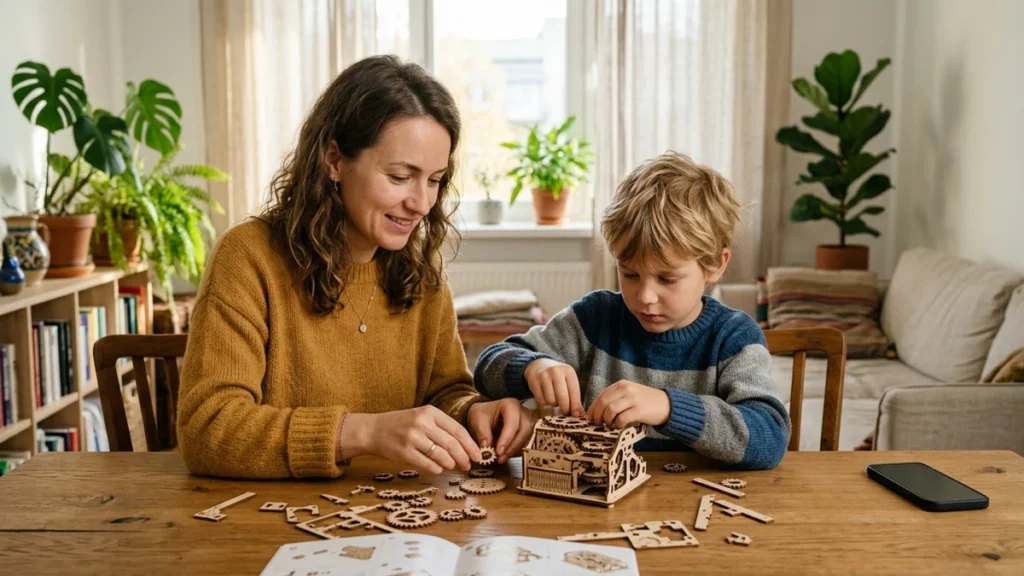
Second, their parents—primarily younger Millennials and older Gen Z—bring a different mindset to childrearing. Having lived through algorithmic addiction and public social media scrutiny themselves, these parents are pioneering a return to intentional offline childhoods: tactile wooden toys, outdoor nature exploration, strict privacy protection against oversharing family photos online (anti-sharenting), and prioritized emotional co-regulation.
Abrupt Directives & Unexplained Bans
Commands like “Shut it off immediately, because I said so” or snatching a device trigger an acute dopamine withdrawal crisis. Children perceive the adult as an arbitrary obstacle, causing shutdown or prolonged meltdowns.
Collaborative Boundaries & Sensory Bridges
Explaining causal logic, offering choices between two acceptable options, and providing 5-minute transition warnings. When distress escalates, the SOS Button in AI Family OS delivers exact grounding phrases in 10 seconds.
4 Evidence-Based Parenting Rules for Raising Alpha & Beta Children
Translating developmental research into peaceful daily routines requires realistic, sustainable strategies. Pediatricians and emotion-coaching specialists highlight four core principles:
- Replace Arbitrary Bans with Transparent Causality. When a child in generation alpha encounters an unyielding "No," their nervous system interprets it as arbitrary control. Add a single sentence of rationale: "We are putting the tablet away at 7:30 PM not to punish you, but because blue light delays your sleep hormone melatonin, and your body needs deep rest for tomorrow's soccer game."
- Construct Predictable "Sensory Bridges." Never shut down interactive digital play without a runway. Abrupt dopaminergic drops reliably trigger distress—a dynamic detailed in our clinical framework on how to limit screen time for kids without tantrums. Provide a 5-minute warning paired with a grounding physical transition: a glass of water, five deep breaths, or setting out dinner plates together.
- Protect Unscheduled "Boredom Windows." Resist the impulse to curate every minute of your child's schedule with digital entertainment or structured classes. Leaving 30 to 45 minutes of daily, open-ended quiet time activates the brain's Default Mode Network (DMN), fostering self-directed play, creative problem-solving, and intrinsic focus.
- Practice Emotion Coaching Before Problem-Solving. Acknowledge and name the child's underlying emotional state before offering logical solutions ("I see how frustrated you feel that the build collapsed after working on it for so long"). Only when physiological arousal subsides can higher cognitive centers re-engage.

How AI Family OS Empowers Parents in High-Stress Moments
Understanding child psychology in a calm moment is straightforward. But at 8:00 PM, when dinner is burning, an infant in Generation Beta is teething, and an older child in generation alpha is resisting bedtime, parental cognitive bandwidth is severely taxed.
To support families in these exact moments, Dzerkalce created AI Family OS: Parenting Guide. It is essential to note that this is not a device timer or screen blocker. Instead, it is an evidence-based, compassionate AI parenting companion designed to support adult regulation and communication:
- Personalized Child Passport: Parents document each child's specific developmental age, temperament, sensory triggers, and family values once, establishing a contextual baseline for both Alpha and Beta siblings.
- 10-Second SOS Button: When meltdowns or power struggles occur, pressing the SOS button provides instant guidance filtered through 4 support lenses—child emotions, biorhythms and physiology, calm parental phrases to de-escalate, and restoring household equilibrium.
- Curated Family Library: Direct access to pediatrician-reviewed developmental milestones, positive discipline frameworks, and attachment science tailored to contemporary family life.
Frequently Asked Questions (FAQ)
What years define Generation Alpha?
According to demographic guidelines established by McCrindle Research, generation alpha includes individuals born from 2010 through 2024. In 2026, the oldest members are turning 16 years old, while the youngest are toddlers around 2 years of age.
What is the gen beta age range and who are they?
The gen beta age range begins with births starting on January 1, 2025, and will span through 2039. These children are being raised in an era of conversational, multimodal AI assistants and smart home environments by Millennial and older Gen Z parents.
How does Gen Alpha differ from Generation Z (Zoomers)?
The fundamental distinction lies in their age during digital exposure. While Gen Z adopted smartphones and algorithmic social media during adolescence, Gen Alpha interacted with responsive touchscreens, streaming algorithms, and interactive games from toddlerhood, resulting in distinct visual cognitive processing and collaborative authority expectations.
Why do authoritarian disciplinary measures backfire with Gen Alpha kids?
Because these children inhabit environments featuring continuous feedback and transparent search information, top-down decrees without stated rationale are perceived as arbitrary unfairness. Collaborative agreements, advance transition warnings, and validated feelings consistently achieve lasting cooperation without yelling or coercion.
Raising a Generation Alpha Kid or a Generation Beta Baby?
Build a customized Child Passport in AI Family OS by Dzerkalce: input your child’s age, temperament, and sensory triggers to get real-time co-regulation scripts in 10 seconds through the SOS button during any bedtime or screen-time friction.